Patient Education
Safelift vs. Traditional Facelift: Which Is Right for You?
A side-by-side look at the Safelift and the traditional SMAS/deep-plane facelift — anesthesia, downtime, cost, candidacy, and how long results last — so you can discuss the right option with Dr. Malouf.
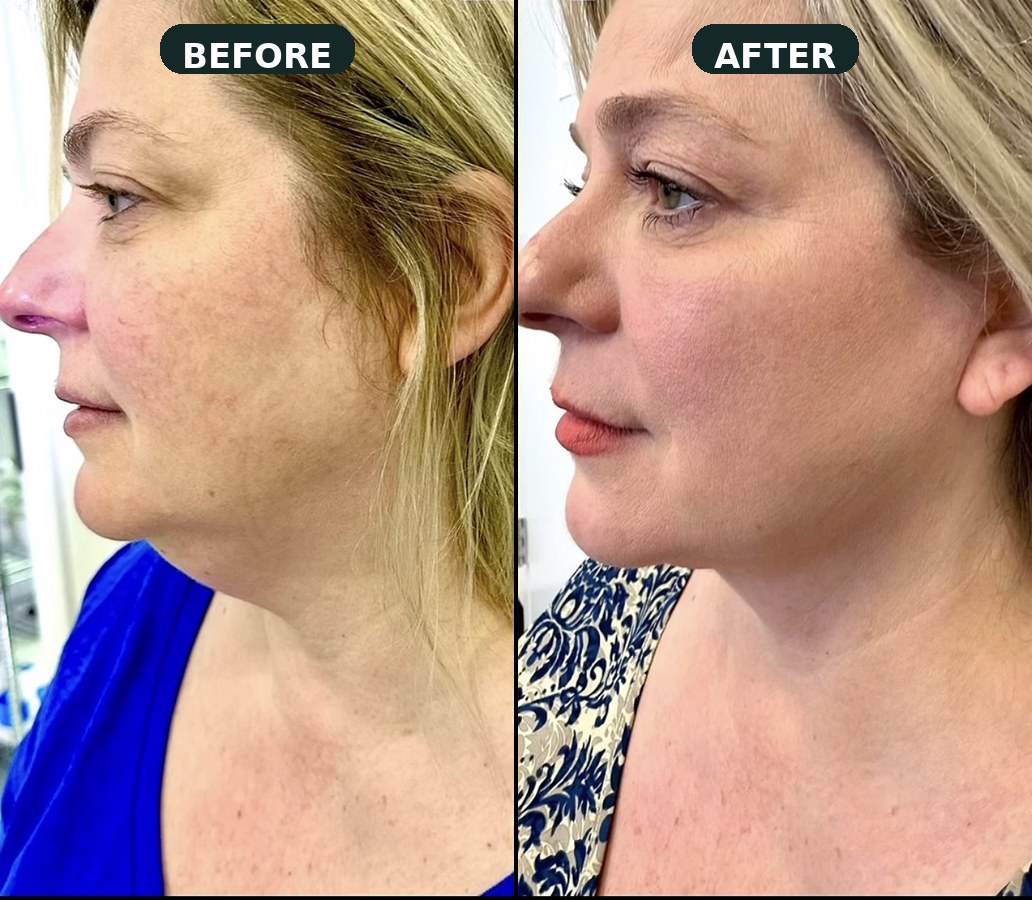
What is a Safelift?
A Safelift is a minimally invasive lower-face and jawline lift performed in-office under local tumescent anesthesia — no general anesthesia, no IV sedation, and no hospital admission. Through small, well-hidden incisions near the ear, Dr. Malouf repositions the underlying tissue of the jowls and jawline to restore a firmer contour. Because the procedure is limited to the lower face, it is typically faster to perform and to recover from than a full facelift, while still delivering a genuine surgical improvement rather than a temporary or non-surgical one. Read the complete procedure details on the Safelift Mini-Facelift page.
What is a traditional facelift?
A traditional facelift — often described as an SMAS (superficial musculoaponeurotic system) facelift or deep-plane facelift — addresses a wider area of the face and neck. The surgeon lifts and repositions the deeper support layer of tissue beneath the skin, not just the skin itself, which produces a more comprehensive and longer-lasting result for patients with more advanced sagging. Dr. Malouf performs his version of this procedure under local tumescent anesthesia as well, avoiding general anesthesia while still addressing the midface, jawline, and neck in a single surgery. Full details are on the Deep Plane Facelift page. Some patients pair either lift with a dedicated Mini Neck Lift if neck laxity is the primary concern.
Safelift vs. facelift: side-by-side comparison
Every patient's anatomy and goals are different, and the table below reflects general patterns Dr. Malouf discusses in consultation — not a guarantee of any specific outcome.
| Factor | Safelift (mini-facelift) | Traditional facelift (SMAS/deep-plane) |
|---|---|---|
| Anesthesia | Local tumescent only — awake and comfortable | Local tumescent (Dr. Malouf's approach) or general anesthesia, depending on surgeon |
| Area treated | Lower face and jawline | Midface, jawline, and neck |
| Incisions | Short incisions around the ear | Longer incisions around the ear and into the hairline |
| Typical downtime | About 1–2 weeks | About 2–3 weeks |
| Ideal candidates | Early to moderate jowling or jawline laxity | More advanced midface, jawline, and neck laxity |
| Longevity | Multiple years; typically shorter-lasting than a full facelift given the smaller scope | Generally longer-lasting given the deeper, broader repositioning |
| Cost | Generally lower, reflecting the smaller surgical scope | Generally higher, reflecting the broader surgical scope; discussed during consultation |
How is a Safelift different from a facelift in terms of anesthesia?
This is the single biggest distinction patients ask about. Many traditional facelifts nationally are performed under general anesthesia or heavy IV sedation in a hospital or surgical center. Dr. Malouf's practice is built around avoiding general anesthesia whenever medically appropriate — both the Safelift and his deep-plane facelift are performed using local tumescent anesthesia, so you remain awake, breathing on your own, and able to go home the same day for either procedure.
How do the incisions and downtime compare?
Because the Safelift addresses a smaller area, the incisions are shorter and confined mostly around the ear. A traditional facelift's incisions typically extend further, often into the temporal hairline and behind the ear, to allow the surgeon to reach and reposition the neck and midface tissue. This difference in incision length and dissection depth is the main reason recovery timelines differ: Safelift patients often feel presentable in public within 7–10 days, while traditional facelift patients generally plan for 2–3 weeks before swelling and bruising fade enough for most social situations.
How do I know which one is right for me?
The right choice comes down to how much laxity is present and where. If your main concern is jowling along the jawline with a still-supportive neck and midface, a Safelift may accomplish your goals with less downtime. If you have more advanced sagging affecting the cheeks, jawline, and neck together, a traditional deep-plane facelift may deliver a more complete and durable result. Some patients are also good candidates for combining a Safelift or facelift with a separate Mini Neck Lift if neck skin laxity is a distinct concern. Dr. Malouf evaluates your anatomy in person before recommending either path — no online description substitutes for that assessment.
Does a dermatologist perform facelifts differently than a plastic surgeon?
Both board-certified dermatologic surgeons and plastic surgeons can be trained in facelift techniques, including SMAS plication and deep-plane dissection. The distinction patients should focus on is a surgeon's specific training, experience, and outcomes with facial rejuvenation — not the specialty label alone. Dr. Malouf has personally performed more than 30,000 procedures over his career, with training that includes surgical dermatology and Mohs micrographic surgery from his residency at Texas Tech in Lubbock (1996–99), following his internship at John Peter Smith Hospital (1995–96).
What does cost depend on?
Cost for either procedure depends on the extent of correction needed, whether additional procedures (such as a neck lift or eyelid surgery) are combined at the same time, and the surgical facility fees involved. Because a Safelift addresses a smaller area, it's generally positioned at a lower price point than a full facelift, but exact pricing is only appropriate to discuss after an in-person evaluation. Contact the practice through the consultation page to schedule an assessment.
Frequently asked questions
Is a Safelift the same as a facelift?+
A Safelift is a type of facelift — specifically a minimally invasive lower-face and jawline lift performed under local anesthesia. A traditional facelift (SMAS or deep-plane) addresses a broader area, typically under general anesthesia or IV sedation, and involves more extensive tissue repositioning.
Which lasts longer, a Safelift or a traditional facelift?+
Both are surgical procedures with long-lasting results. A traditional deep-plane facelift generally lasts longer because it repositions a larger area of tissue at a deeper plane, while a Safelift, being more limited in scope, typically holds its result for a shorter but still substantial number of years. Individual results vary and depend on skin quality, aging, and lifestyle factors.
Can I have a facelift without general anesthesia?+
Yes. Dr. Malouf performs both the Safelift and his version of the deep-plane facelift under local tumescent anesthesia rather than general anesthesia, which many patients prefer for safety and recovery reasons.
How do I know if I need a mini facelift or a full facelift?+
The decision depends on how much sagging is present and where. Patients with limited jowling or early jawline laxity are often good candidates for a Safelift, while patients with more advanced neck and midface laxity may benefit more from a full deep-plane facelift. A consultation with Dr. Malouf can help clarify which approach fits your anatomy and goals.
Does a dermatologist perform facelifts the same way a plastic surgeon does?+
Board-certified dermatologists with surgical training, like Dr. Malouf, perform facial rejuvenation surgery using many of the same techniques as plastic surgeons, including SMAS plication and deep-plane dissection. The training pathway differs, but the surgical principles — safe anesthesia, tissue repositioning, and incision placement — are shared goals across both specialties.
What is recovery like after each procedure?+
Safelift recovery is typically shorter, with most patients returning to normal activities in about a week to ten days. A traditional facelift under general anesthesia usually requires two to three weeks before patients feel comfortable in public, with residual swelling resolving over additional weeks.
Take the next step
Not sure which lift is right for you?
Book a consultation with Dr. Malouf to discuss your anatomy and goals in person.