Cosmetic Surgery
Deep Plane Facelift in Dallas-Fort Worth — Under Local Anesthesia
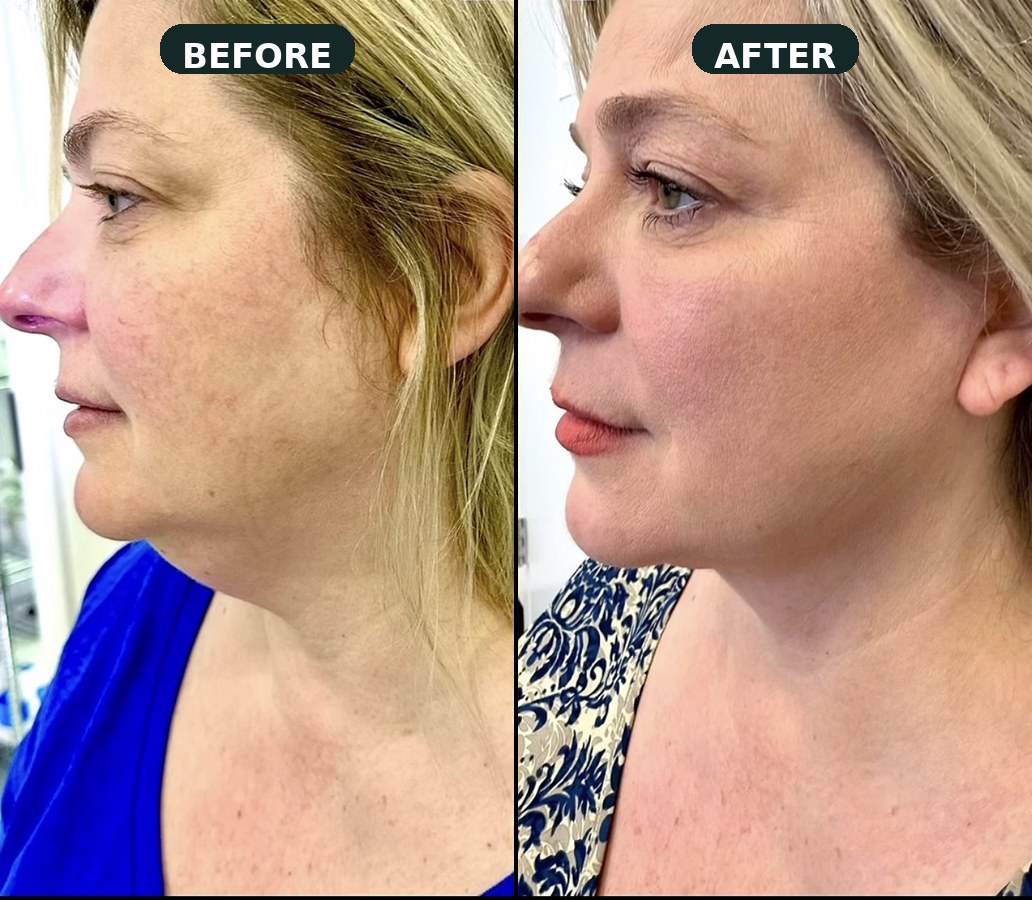
A true deep plane facelift, performed entirely in Dr. Malouf's Fort Worth office under local (tumescent) anesthesia. No general anesthesia. No hospital. Same anatomic dissection, dramatically lower risk.
The procedure
What a deep plane facelift actually is
The term “deep plane facelift” refers to a facelift performed at the level of the mass SMAS — the superficial musculoaponeurotic system layer that supports the face and neck. Every meaningful modern facelift, whether marketed as “SMAS,” “high-SMAS,” “SMAS suspension,” “SMAS plication,” “extended SMAS,” “composite,” or “deep plane,” acts on this same anatomic structure. The distinctions between them are largely semantic — a point the peer-reviewed evidence now confirms.
Dr. Malouf has been operating on the mass SMAS for over 20 years. He performs the procedure in his Fort Worth office under local (tumescent) anesthesia. Patients are awake, comfortable, and go home the same day — with no general anesthesia, no hospital, and no facility fee.
Experience & training
Why a dermatologist for a deep plane facelift?
Board-certified dermatologists were the pioneers of minimally invasive cosmetic surgery under local anesthesia — including tumescent liposuction, the Mohs technique, and the entire family of short-scar and deep-tissue facelift procedures. Plastic surgery residency programs are heavily weighted toward reconstruction and free flaps; cosmetic surgery, particularly office-based cosmetic surgery under local anesthesia, is largely learned in dermatology.
Dr. Peter Malouf trained directly under Jeffrey A. Klein, MD, the dermatologist who invented tumescent anesthesia. Over the past 25+ years, Dr. Malouf has refined a deep plane facelift technique that evolved from the classic short-scar S-lift literature — first popularized by Saylan and adapted by generations of dermatologic surgeons — into a full deep plane procedure performed entirely under local anesthesia in his Fort Worth office. He currently performs deep plane facelifts on a routine basis as one of his signature cosmetic surgery procedures.
The evidence
SMAS suspension vs. deep plane: what the studies actually show
A great deal of marketing has been built around the idea that a sub-SMAS “deep plane” dissection with release of the retaining ligaments produces superior facelift results. When the peer-reviewed data are examined together, that claim does not hold up.
A 2025 meta-analysis published in the Zagazig University Medical Journal pooled the available comparative literature and reported that SMAS technique success rates and deep plane success rates were essentially identical — 93.73% vs 92.42%. Complications, however, were nearly three times higher in the deep plane group: 12.12% versus 4.18% for SMAS (Awad et al., ZUMJ 2025).
A separate 2019 meta-analysis of 183 facelift studies in the Aesthetic Surgery Journal similarly found that the deep plane approach carried a statistically significant increase in major hematoma (OR 1.67, P<0.05), and that high-lateral-SMAS and composite rhytidectomy carried the highest rates of temporary facial nerve injury. The authors concluded that facelift technique “should be selected based on quality of results and not the complication profile” (Jacono & Bryant, ASJ 2019).
A 2025 systematic review in Annals of Plastic Surgery pooling 47 studies and 10,766 patients reached the same conclusion: “both SMAS and deep techniques demonstrate comparable safety profiles,” with no clear evidence favoring one over the other for aesthetic outcome (Vayalapra et al., Ann Plast Surg 2025).
The clinical takeaway: the surface of the facelift is happening at the SMAS in every case. Undermining beneath the SMAS to release retaining ligaments does not deliver a demonstrably better result, but it does substantially increase the risk of hematoma and transient motor nerve injury. Dr. Malouf’s approach is to operate on the SMAS with the technique the evidence supports — achieving the same repositioning of the mid-face, jawline, and neck without exposing the patient to the added complication profile of a sub-SMAS dissection.
In-office under local vs. hospital under general
Why local anesthesia matters
Anesthesia risk
General anesthesia carries cardiac, pulmonary, and DVT risk. Local tumescent anesthesia eliminates those categories of risk entirely.
Recovery
No anesthesia hangover, no post-op nausea, no delayed emergence. Most patients return to social activity within about two weeks.
Cost
No facility fees, no anesthesiologist fees, no hospital charges. Patients pay for the procedure and the physician — not the infrastructure.
Bleeding
Tumescent anesthesia contains dilute epinephrine that constricts vessels throughout the operative field, dramatically reducing intraoperative bleeding and bruising.
Comfort
Patients are awake and comfortable throughout the procedure. Communication is possible — an underappreciated safety benefit.
Nerve safety
The mass-SMAS dissection Dr. Malouf performs stays out of the sub-SMAS plane where the branches of the facial nerve are most vulnerable — the source of the elevated transient-nerve-injury rates reported in the deep plane literature.
What to expect
How the procedure works
1. Consultation
Dr. Malouf personally evaluates your anatomy, discusses your goals, reviews photos, and confirms whether a deep plane facelift is the right procedure for you.
2. Day of surgery
You arrive at the Fort Worth office. Incision lines are marked. Tumescent anesthesia is infiltrated slowly and completely into all operative areas.
3. SMAS dissection & repositioning
Dr. Malouf raises the skin flap, addresses the mass SMAS, and repositions the mid-face and jawline superolaterally — without unnecessary sub-SMAS undermining.
4. Closure
The flap is secured with permanent deep sutures. Skin is closed under no tension. Incisions are hidden along the tragus and behind the ear.
5. Go home the same day
No overnight admission. You leave the office in a soft dressing and go home with a friend or family member driver.
6. Recovery
Sutures removed at about one week. Most patients return to social activity within 7–14 days. Ongoing softening of tissues continues for several months.
Common questions
Deep plane facelift FAQ
Do dermatologists perform deep plane facelifts?+
Yes. Board-certified dermatologists have been pioneers of minimally invasive cosmetic surgery, including deep plane techniques. Dr. Peter Malouf has performed deep plane facelifts for over 20 years in his Fort Worth office under local anesthesia.
Is a deep plane facelift under local anesthesia safe?+
In experienced hands, deep plane facelift under local (tumescent) anesthesia has an excellent safety profile. It eliminates the risks of general anesthesia — cardiac events, DVT, prolonged anesthesia recovery — while allowing the same deep-tissue dissection and repositioning.
Is a “deep plane” facelift really different from a SMAS facelift?+
Anatomically, both operate on the mass SMAS. Peer-reviewed meta-analyses show essentially identical success rates (approximately 92–94%) between SMAS and deep plane techniques, but higher complication rates for deep plane dissections — including hematoma and transient facial nerve injury. Dr. Malouf’s technique acts on the SMAS in the way the evidence supports without unnecessary sub-SMAS undermining.
How is Dr. Malouf’s facelift different from a hospital-based deep plane facelift?+
Dr. Malouf performs the procedure entirely in-office under local (tumescent) anesthesia — no general anesthesia, no hospital, no ambulatory surgery center. The dissection is done at the SMAS. Patients avoid the risks and cost of general anesthesia and the elevated complication profile associated with sub-SMAS ligament release.
How long is recovery after a deep plane facelift under local anesthesia?+
Recovery from an in-office deep plane facelift under local anesthesia is typically 7–14 days. Most patients return to normal social activity within two weeks.
How long do the results last?+
Facelift results at the SMAS level typically last 10 years or more. Because the procedure repositions the SMAS — not just the skin — the correction is more durable than skin-only techniques.
How much does a deep plane facelift cost in Dallas-Fort Worth?+
Cost varies based on scope and whether it is combined with other procedures. Pricing is discussed during your consultation with Dr. Malouf.
Am I a candidate for a deep plane facelift?+
Good candidates typically have moderate to advanced midface descent, jowls, jawline laxity, and neck laxity. Dr. Malouf evaluates every patient personally during consultation and will recommend the least invasive procedure that will achieve the goals you want.
How often does Dr. Malouf perform deep plane facelifts?+
Dr. Malouf performs deep plane facelifts on a regular basis — typically two to three per month — as one of his signature cosmetic surgery procedures.
Take the next step
Considering a deep plane facelift?
Book a personal consultation with Dr. Malouf. He will evaluate your anatomy and tell you honestly whether a deep plane facelift is the right procedure for you.